
Learn traditional Piedmontese recipes, cook alongside local chefs and discover the stories behind one of Italy's greatest food cultures.
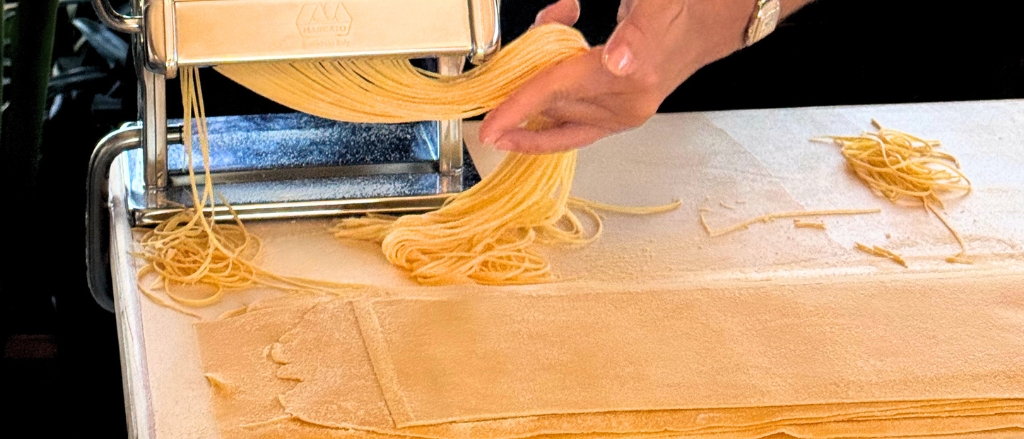
You can understand a lot about a place by stepping into its kitchen.
That's especially true in Piedmont.
Piedmontese cuisine has evolved over centuries, shaped by the region's geography, history and remarkable agricultural diversity. From the rice fields of Vercelli and the Alpine pastures to vineyards, hazelnut orchards and truffle woods, every landscape has contributed its own ingredients and traditions. Respect for seasonality has always been at the heart of local cooking, with recipes naturally changing throughout the year to reflect what the land has to offer.
The region's history has also played an important role. For centuries, the House of Savoy ruled from Turin, bringing culinary influences and refined techniques from across the Alps. At the same time, rural families continued to cook with what was available locally, creating honest, seasonal dishes that celebrated the quality of their ingredients rather than their complexity.
That balance between elegance and simplicity is still one of the defining characteristics of Piedmontese cuisine today.
It's no coincidence that the international Slow Food movement was founded here, in the nearby town of Bra, in 1986. Rather than fighting fast food with complicated rules, it encouraged something that had always existed in Piedmont: respect for local ingredients, traditional recipes, biodiversity and the pleasure of taking time to prepare and share a meal.
Those values are still very much alive today.
In 2026, Italian cuisine was officially inscribed on UNESCO's Representative List of the Intangible Cultural Heritage of Humanity.
The recognition wasn't given to a particular recipe or a famous dish.
It celebrates something much bigger: respect for ingredients, knowledge passed from one generation to the next, the connection between food and local communities, and the simple act of sitting around the table together.
The recognition isn't about one particular recipe. It celebrates a way of living: passing knowledge from one generation to the next, respecting local producers, cooking with the seasons and bringing people together around the table.
I think that's exactly what makes cooking in Piedmont so special.
One of the reasons I love organizing cooking classes is that every dish has a story behind it.
Take tajarin, for example.
This delicate pasta became famous for the generous number of egg yolks used in the dough, creating its beautiful golden color and silky texture.
Or agnolotti del plin, one of the symbols of the Langhe. Their name comes from the little plin — the pinch used to close each piece by hand. It's a small gesture, but one that's been repeated in Piedmontese kitchens for generations.
Depending on the season, you might also prepare traditional appetizers, bunet, or other local recipes that reflect the ingredients available at that time of year.
And if you're visiting during white truffle season, there's a good chance the meal will end with freshly shaved White Truffle of Alba over the pasta you've just prepared yourself.
Simple.
Traditional.
And, if you ask most locals, very difficult to improve.
This is one of the experiences I most often recommend to families and groups of friends.
Everyone cooks together, following the chef step by step. Whether you're making fresh pasta, preparing a traditional dessert or learning a new technique, everyone is involved from beginning to end.
One of the things my guests appreciate most is that the class can be adapted to what they enjoy.
Some prefer to prepare two different pasta dishes, comparing tajarin with agnolotti del plin.
Others would rather combine a traditional appetizer with homemade pasta and finish with a classic Piedmontese dessert such as bunet.
Every cooking experience is a little different.
I work with several wonderful local chefs, each with their own style, favorite recipes and unique location. Together, we choose the format that best suits your group and the season.
The cooking class can also be combined with other experiences.
Many guests enjoy visiting a local winery before or after the class, creating a perfect day of wine and food.
During white truffle season, one of my favorite combinations starts with a private truffle hunt in the morning. If you decide to purchase the truffle you've found, we'll prepare a dish that allows it to take center stage, finishing the meal by shaving your own White Truffle of Alba over the fresh pasta you've just made.
While the chef guides you through every step and I translate the class, I also help capture the best moments on your own phone, so you'll leave not only with new recipes, but also with beautiful photos and videos of the day to look back on.
Over the years, I've built a trusted network of local chefs and partners across the Langhe. I can recommend the setting that best suits your group and the kind of day you'd like to create.
Some cooking classes take place at restaurants, where you'll cook alongside talented local chefs before sitting down to enjoy the meal you've prepared together.
Others are hosted at wineries with their own kitchens, combining a hands-on cooking class with the world of Barolo, Barbaresco and other Piedmontese wines.
If you're looking for something even more personal, I can also organize a cooking class in a private farmhouse, where you'll cook with your host in a warm, relaxed atmosphere that feels just like being welcomed into an Italian home.
No matter which option you choose, I'll help you find the chef, the location and the atmosphere that best fit your group.
Wine and food have always belonged together in Piedmont.
If you'd like, your cooking class can easily be combined with a private wine tasting, allowing you to discover how local wines complement the dishes you've prepared.
Whether it's a fresh Arneis with traditional appetizers, a Barbera with homemade pasta or a Barolo alongside a richer Piedmontese dish, the experience becomes even more enjoyable when food and wine are shared together.
Depending on the location, we can organize the tasting at the winery itself or include a separate winery visit before or after your cooking class.
It's a wonderful way to experience two of Piedmont's greatest traditions in a single day.
One of the things I enjoy most is helping guests combine different experiences into one memorable day.
Your private cooking class can begin with a morning truffle hunt, followed by preparing a dish topped with the truffle you've found and decided to purchase.
Or we can include a private wine tasting, carefully pairing local wines with the dishes you've prepared.
If you have a little more time, we can finish the day with a stroll through one of the beautiful villages of the Langhe, such as Barolo, La Morra or Neive, each offering its own atmosphere, history and panoramic views.
There isn't a single perfect itinerary.
The perfect day is simply the one that's created around you.
If you're planning to spend more time exploring the Langhe, you may also enjoy:
Let's create a private cooking experience that feels like it was made just for you.
Let's chat now